
Five Small Details You Can See During a SC Johnson Global Headquarters Tour That Have Big Stories

It’s becoming increasingly rare to experience Frank Lloyd Wright’s architecture the way it was meant to be experienced: in person, in use and largely intact. Of the more than 1,000 buildings he designed over his 70-year career, only about half were ever built, and many of those have since been lost to fire, neglect or redevelopment.
At SC Johnson’s Global Headquarters in Racine, Wisconsin, two of Wright’s most ambitious works still stand, the Administration Building and Research Tower. Wright was known for his attention to detail, and true to his reputation, they reward close attention. From the iconic Pyrex tube ceilings to furniture in the Great Workroom designed down to the last inch, these buildings are full of clever designs and details that are easy to walk past if you don’t know where to look.
Here are five you might have missed:
Frank Lloyd Wright’s Signature Tile
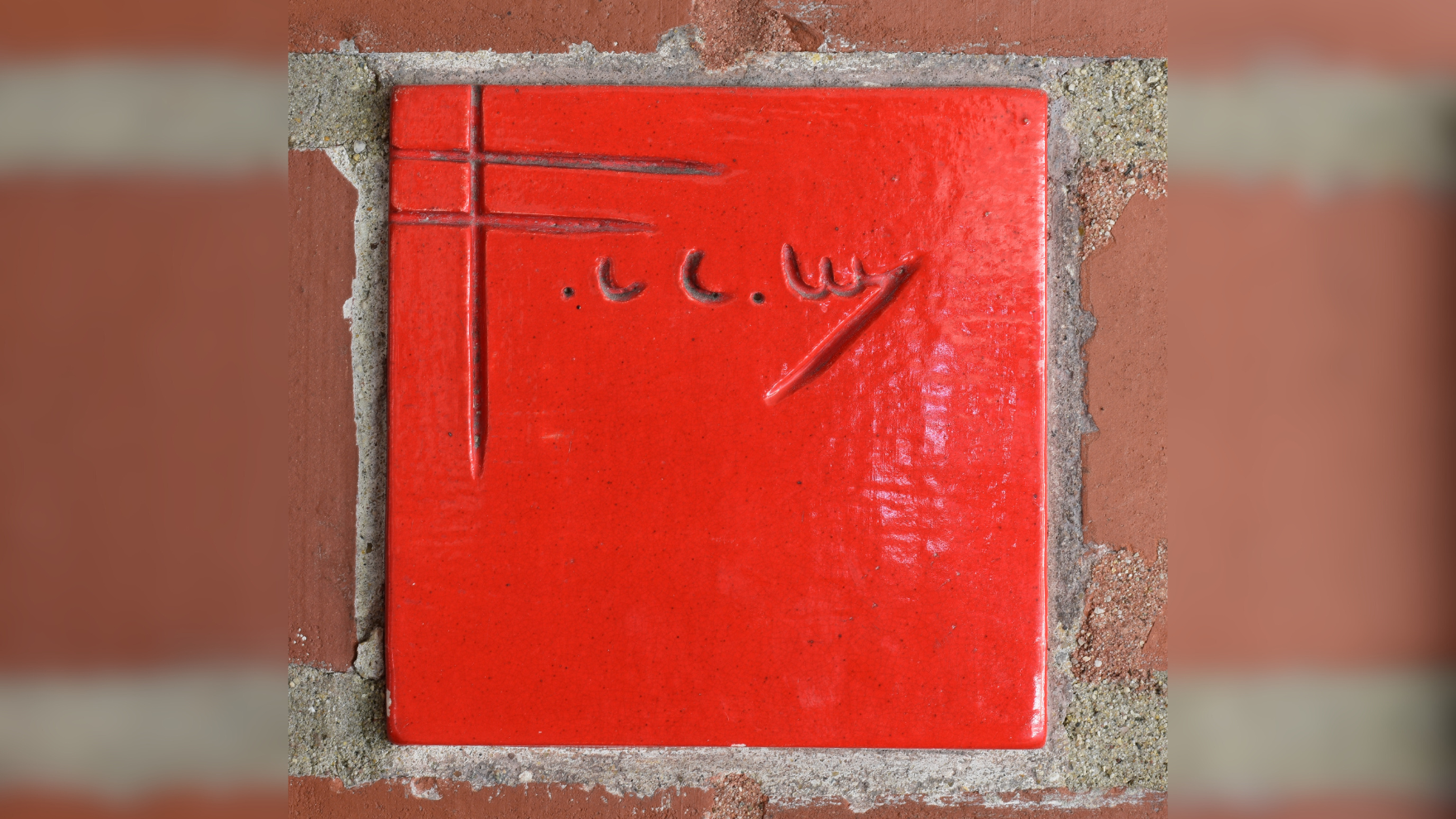
Just inside the entrance to the Administration Building is a small detail that is easy to overlook: a red 4x4-inch square ceramic tile, marked with Frank Lloyd Wright’s initials.
In the 1950s, Wright commissioned a limited number of these tiles, made by amateur ceramicist Jeannette Pauson Haber, and placed them on only a handful of buildings he personally approved of. A prominent theory is that he put them on buildings he considered to be among his best work, and it’s believed that he placed them on as few as 25 of his works. The Administration Building is only one of two structures to receive a tile retroactively, a quiet but meaningful endorsement from Wright himself.
Whatever his exact reasoning, SC Johnson is one of the few places where visitors can see one of these tiles up close.
Fun Fact: Taliesin, Wright’s home and studio in Spring Green, Wisconsin, and the Solomon R. Guggenheim Museum in New York City, both received their own signature tiles.
The Pyrex Tubes
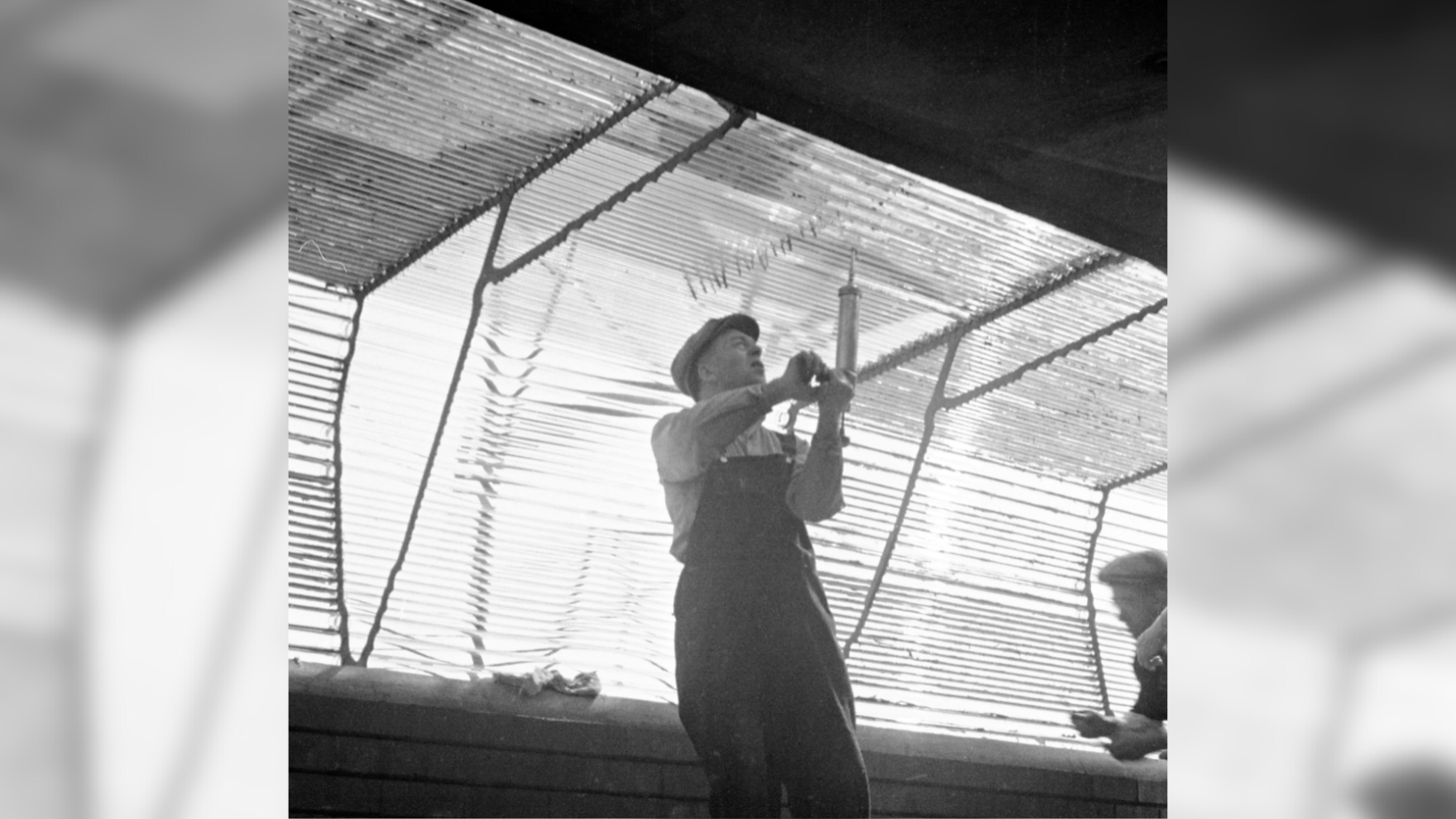
Traditional windows are scarce on SC Johnson’s Frank Lloyd Wright-designed buildings – and that wasn’t by accident. Wright disliked the idea of framing views of Racine’s industrial surroundings. So he turned to an unconventional solution: Pyrex tubes.
In the Administration Building, the tubes form the ceiling itself. In the Research Tower, they make up the walls. When you look around while inside, you’ll realize that even with the clear design, sunlight comes through, but the outside world stays abstract, reduced to glow and shadows.
Originally, the tubes that made up the Administration Building’s ceiling were joined together with a caulking called mastic. The mastic hardened like concrete, and as Wisconsin’s seasons forced the glass to expand and contract, cracks formed. As with many of Wright’s buildings, leaks followed.
In 1958, Dow Corning developed a silicone rubber caulk that replaced the mastic, helping address many of the leaking issues. That silicone caulk is what you’ll see between the tubes on a tour of the Administration Building today. Still, careful observers can spot small sections of the original mastic, a reminder of both Wright’s ambition and the evolution of building science.
Fun Fact: If laid end to end, the original Pyrex tubes extended over 43 miles.
The Original Parquet Flooring
Long before SC Johnson became well-known for brands such as Raid, Glade and Windex, the company’s original product was something completely different – parquet flooring.
In the late 1800s, Samuel Curtis Johnson purchased a parquet flooring company and quickly found success manufacturing wood floors for the Racine area and beyond. Customers soon began asking about how to care for their floors. Ever the entrepreneur, he began experimenting with various wax recipes in his bathtub, finally landing on what became Johnson’s Prepared Paste Wax.
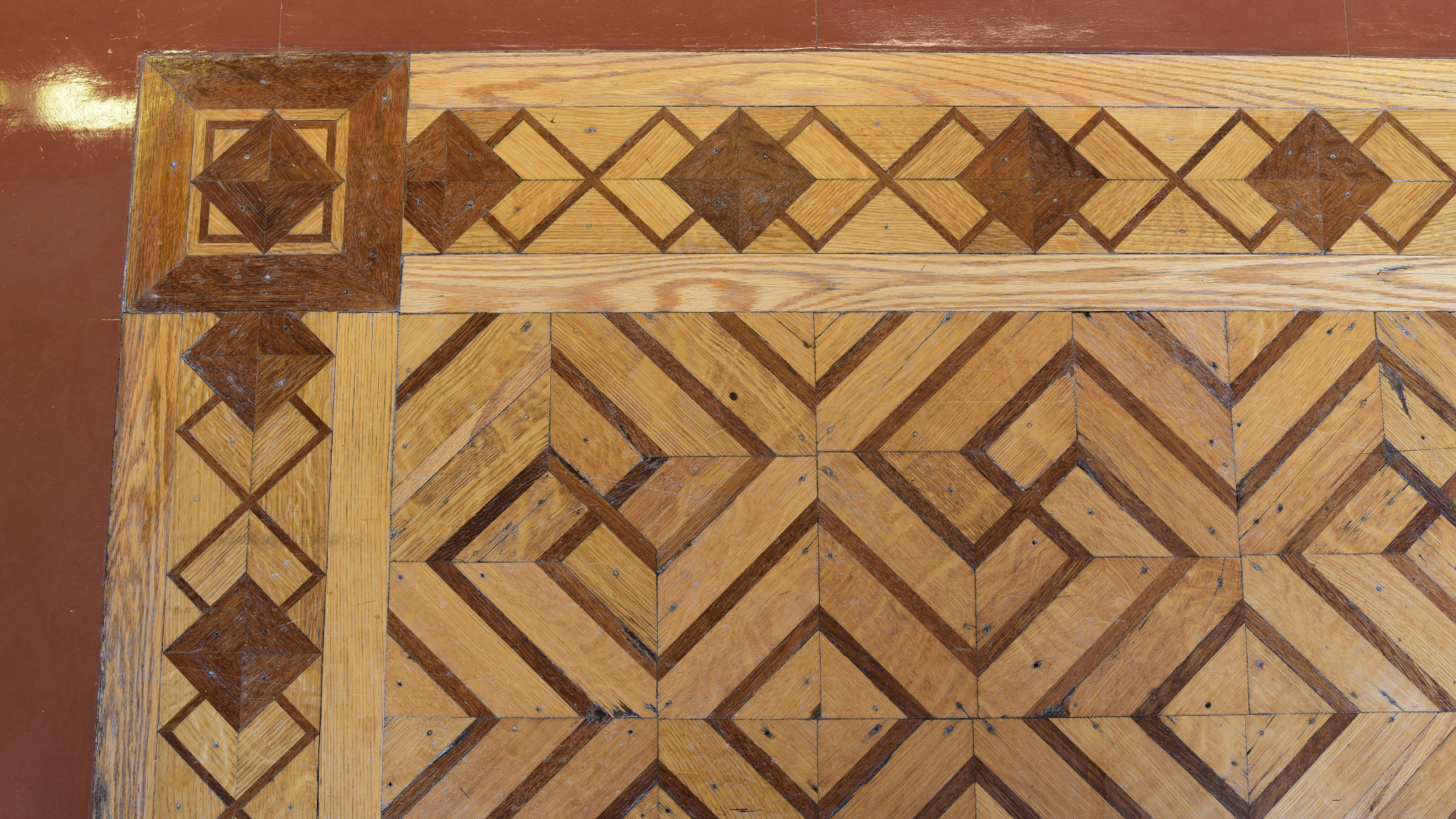
On weekend tours, visitors are taken to the Penthouse level of the Administration Building, where a small piece of history lies – a section of parquet flooring originally made by the company for a 1910 Racine home.
Fun Fact: This floor has only ever been maintained with SC Johnson products.
Kasota Stone in the Administration Building and Fortaleza Hall
The deep red brick that defines the SC Johnson campus is hard to miss. Frank Lloyd Wright used the distinctive maroon-orange hue, often called Racine Red, throughout the Administration Building and Research Tower. Less obvious is the beige-colored stone used to accent it.
That limestone, known as Kasota stone, was mined from a quarry in Minnesota and selected by Wright for its warm, understated contrast. It appears throughout the Administration Building, which began construction in late 1936 and was completed in 1939, grounding the bold brickwork with a quiet texture.
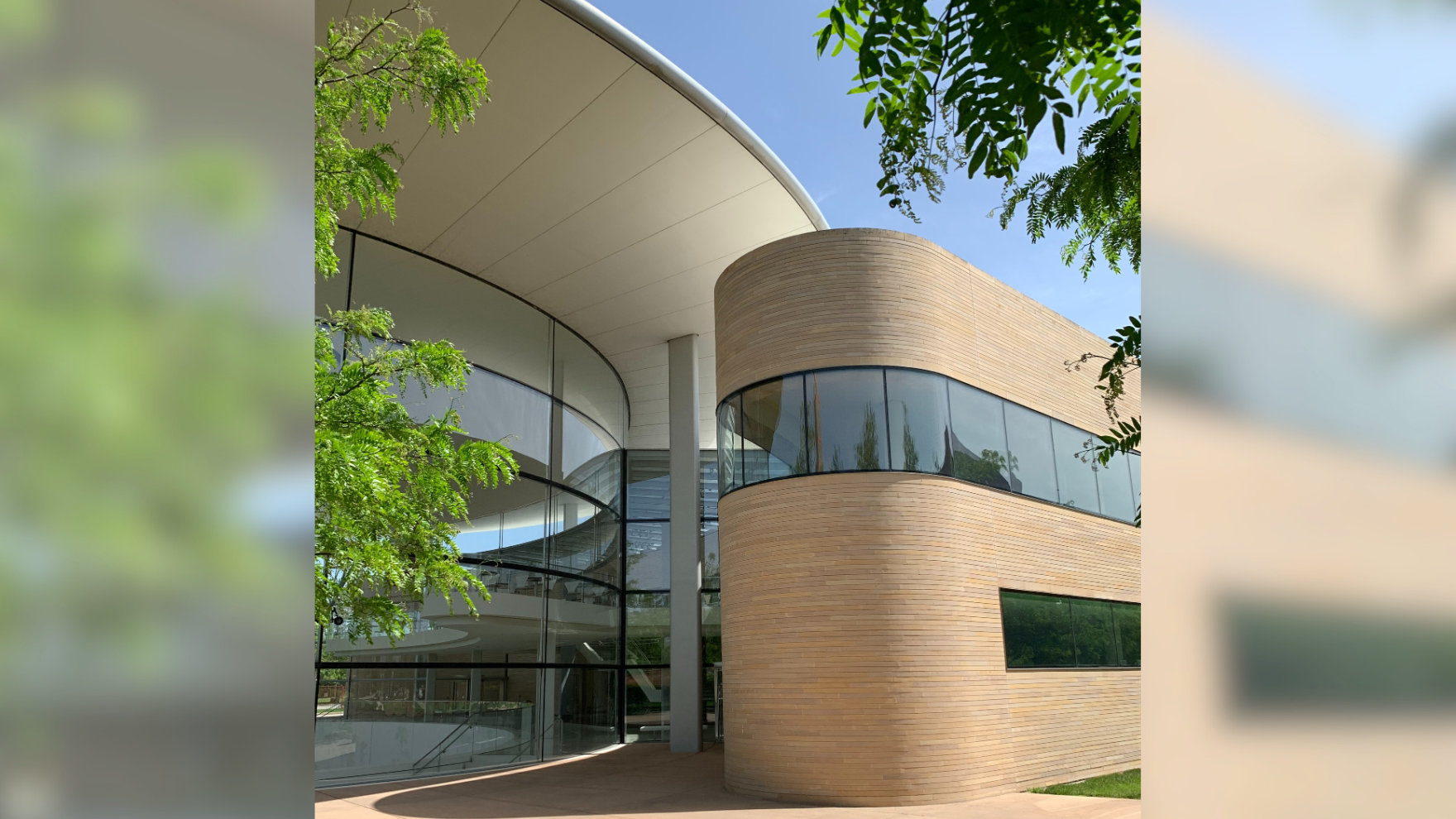
Nearly 70 years later, when Lord Norman Foster was commissioned to add another building to SC Johnson’s campus, he chose to echo Wright’s material rather than compete with it. Designed to house a historic airplane, an employee cafeteria, and honor company leaders Sam Johnson and H.F. Johnson, Jr., Fortaleza Hall uses the same Kasota stone from the same quarry.
Foster even scraped mortar from between each stone horizontally, subtly mirroring Wright’s brickwork, reinforcing a sense of continuity across generations.
Fun Fact: Fortaleza Hall is home to the SC Johnson Gallery: At Home with Frank Lloyd Wright, which features two original exhibits on his life and works.
H.F. Johnson, Jr.’s Penthouse Office
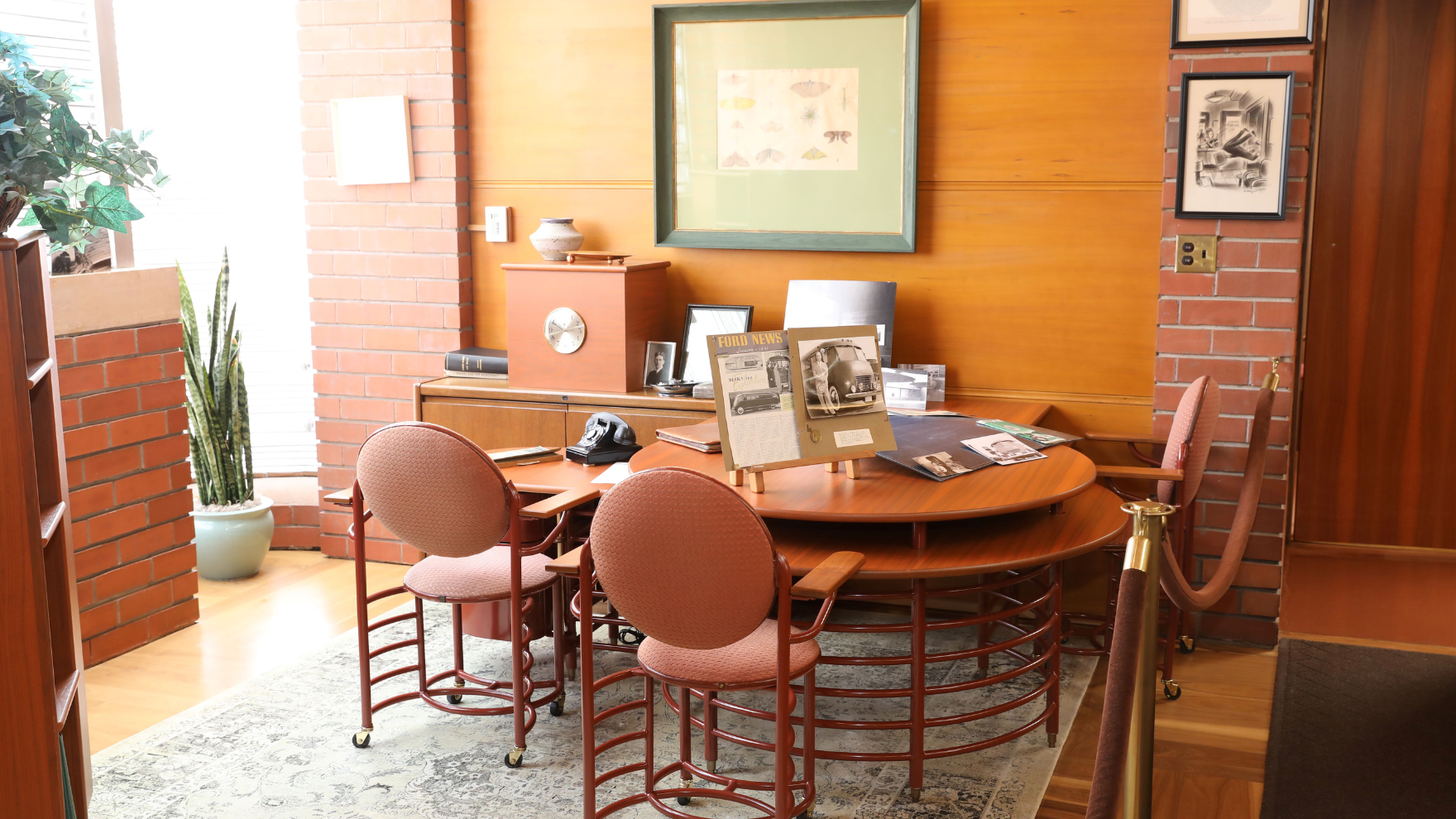
Weekend tours also offer access to one of the most personal spaces on campus: the penthouse office of H.F. Johnson, Jr., located at the center of the Administration Building’s third floor. This space is where H.F., Jr. oversaw the construction of the Research Tower, erected just north of the Administration Building. He and Frank Lloyd Wright met several times here, including one infamous encounter involving a three-legged chair.
Wright famously designed the Administration Building’s chairs with only three legs, believing instability would encourage proper posture. In practice, it encouraged something else entirely as employees routinely tipped over when shifting their weight or opening a drawer.
When H.F. Johnson, Jr. raised concerns, Wright insisted that he and the rest of the company would “have to get used to them.” H.F., Jr., invited Wright to his office to continue the conversation. When Wright arrived that morning, he was met with a floor waxed to a high shine and a three-legged chair on which to sit. The story goes that during the meeting, H.F., Jr.’s pencil coincidentally rolled to the floor at some point in the discussion. When Wright bent down to retrieve it, he was promptly tossed from his chair.
Shortly after, the chairs were redesigned with four legs.
Fun Fact: The office you see today has been restored to its 1940s style.
Take a Tour of SC Johnson’s Global Headquarters Campus
While viewing these details and designs online is entertaining, it’s even better seeing them up close. Sign up for a free campus tour here to do just that, and maybe while you’re on it, you’ll find some more special details.