
Improving Recycling
While plastics provide many societal benefits, the world has a plastic waste problem that must be addressed immediately. The world generates about 350 million metric tons of plastic waste each year, with only about 9% being recycled.
In the U.S., only about 10% of plastic is recycled each year. The rest ends up in landfills, incinerators, or the environment. This isn’t because people don’t care. It’s the result of gaps in collection, recycling infrastructure and capabilities, and a lack of consumer education. Confusing rules of what can and cannot be recycled in certain areas, and how, further reduce what is successfully recycled. And many cities and towns simply don’t have the resources to keep pace.

We can fix America’s broken recycling system with Extended Producer Responsibility laws
Extended Producer Responsibility (EPR) laws provide a regulatory framework for companies to assume financial and, often, operational responsibility for post-use paper and packaging, such as plastic bottles.
It funds the expansion of education, collection, infrastructure and end markets, and even affects product and packaging design choices, leading to dramatically increased recycling rates.
SCJ supports federal Extended Producer Responsibility legislation, and you can help by telling your elected officials we need a new U.S. recycling system. We provide a simple way for you to send Congress a message about your support for EPR at the bottom of this page.
What is EPR?
Extended Producer Responsibility (EPR) laws shift primary responsibility for managing product and packaging waste from people and municipalities to the companies that produce it. In practice, this means manufacturers like SC Johnson help fund stronger recycling systems and are incentivized to use recycled materials, design for recyclability, and invest in reuse and refill models.

Status of EPR in the U.S.
States have been the first to adopt EPR laws. While SCJ supports and values the leadership that states have shown in advancing EPR, our long-term objective is a strong federal EPR framework that provides national consistency and clarity. A federal approach would help avoid a fragmented regulatory landscape and make it easier to implement EPR effectively at scale.


Colorado, California, Oregon and several other U.S. states have passed EPR laws and are rolling them out. SC Johnson is one of the companies advocating for EPR across the U.S.

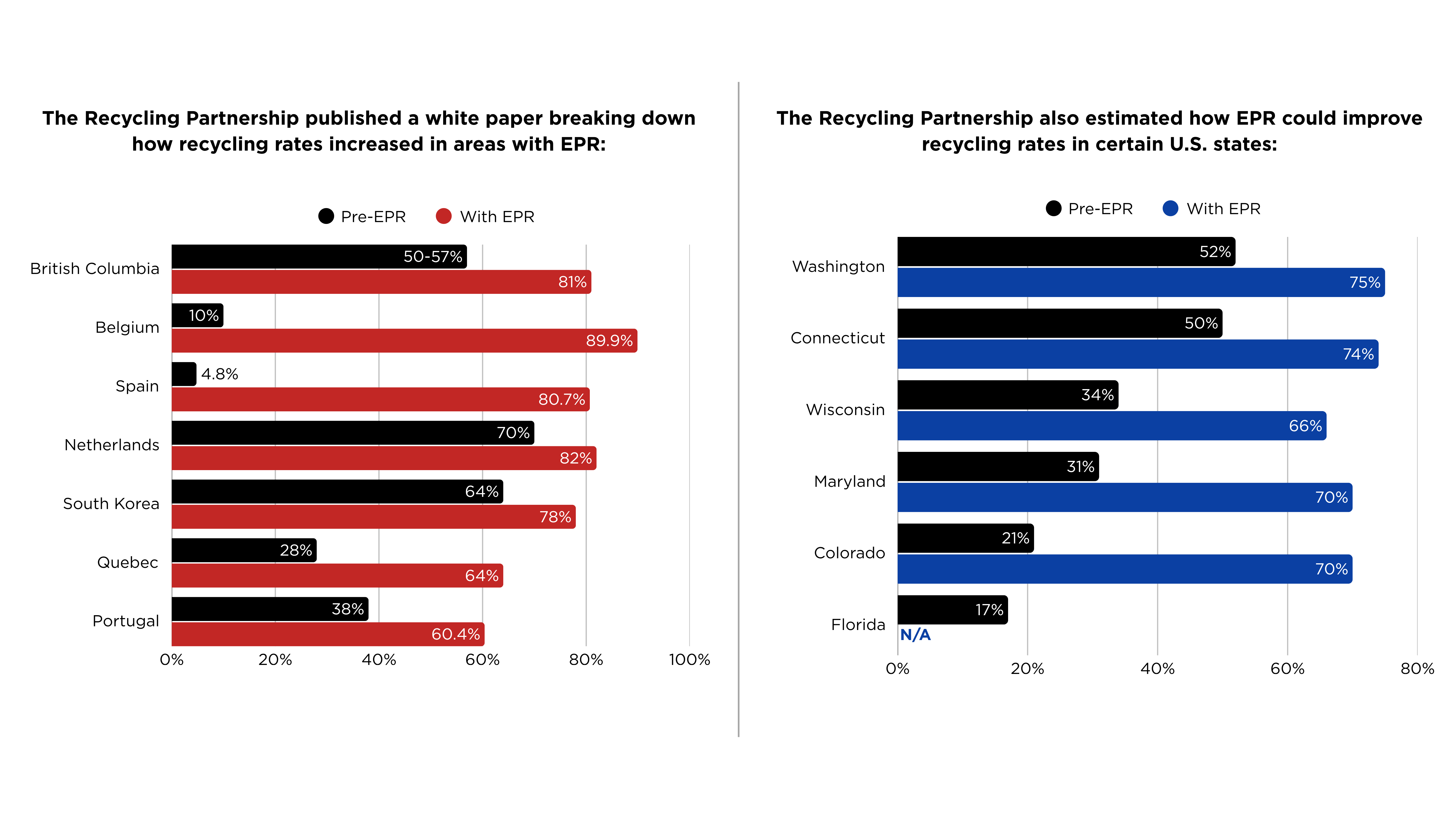
A good example outside of the U.S. is Canada’s British Columbia. There's a province-wide EPR program—and it works. 80% of the packaging there gets recovered and recycled.
EPR's impact on recycling rates
SC Johnson's EPR Leadership
Fixing the plastic waste problem requires more than better packaging; it requires better systems. That’s why SC Johnson has long supported policies that strengthen recycling infrastructure, improve accountability and help keep valuable materials in use.
We believe Extended Producer Responsibility (EPR) is one of the most effective ways to do that, and we’ve worked for years to help advance it in the U.S. and globally.
Making the case for Extended Producer Responsibility
In March of 2024, our Chairman and CEO, Fisk Johnson, shared with the U.S. Senate Committee on Environment and Public Works the five reasons why SC Johnson believes stronger regulation is needed.

Advocating for Strong, Smart Regulations


Reducing Plastic Waste Starts With Our Products
We've made measurable progress by redesigning packaging, increasing recycled content, and expanding refill and reuse options, all to help reduce plastic waste and support a more circular economy.
Since 2018, our focus on recycled content has led to a fourfold increase in post-consumer recycled (PCR) plastic, reaching 25% across our plastic packaging and more than 16,000 metric tons of recycled material used in 2024.
.webp%3Fh%3D960%26iar%3D0%26w%3D1280&w=2048&q=75)
Examples of Plastic Reduction
Here's a snapshot of the steps we've taken:

Reducing Virgin Plastic
We’ve cut our use of virgin plastic by 33 percent since 2018.

More Recycled Content
Many bottles, including Windex® and method® sprays, use high levels of post-consumer recycled (PCR) plastic. Since 2018, PCR use has increased fourfold to 25%.

Better Packaging Design
We’ve eliminated hard-to-recycle components like black plastic caps and added features that make recycling easier.

Refill & Reuse
From Windex® refills to Ecover® refill stations in Europe, we’re reducing single-use packaging. We also encourage reuse of Ziploc® bags when used as directed.

Ziploc® Alternatives
Ziploc® offers more than traditional bags. We also offer alternatives such as Ziploc Endurables®, Ziploc® Paper Bags and Ziploc® Brand Compostable Sandwich Bags.
Tell Congress we need a new U.S. recycling system
You can write your representative and advocate for federal Extended Producer Responsibility legislation by visiting SCJ’s The Blue Paradox website.
