
Less Doesn’t Always Mean More: Common Misconceptions of Sustainable Plastic Packaging

When consumers hear the phrase “sustainable plastic packaging,” many assume it simply means using less plastic. In reality, sustainable plastic packaging can take many forms, from improving recyclability and extending a product’s useful life to removing unnecessary plastic altogether. For many shoppers, a brand committed to sustainability is expected to use less plastic, create less waste and make packaging easier to dispose of responsibly.
Packaging has a lot to do. It needs to protect the product, whether it’s being shipped or sitting on a store shelf, ensure consumers are using the product correctly and efficiently, and function within the existing recycling systems. Balancing those demands, in addition to minimizing material use, means the better solution is not always obvious on the first try.
There is rarely a one-size-fits-all approach to tackling sustainability issues. Often, what works for one part of a product’s package may not work for another, and a change that reduces plastic in one area may create an entirely different challenge somewhere else. The amount and type of plastic still matter, but sustainable packaging is most effective when it’s designed with the larger system in mind.
Consider the spray trigger on a Windex® bottle. To do its job well, the trigger is made up of multiple components, including plastic pieces and a small metal spring. Those materials work together to make the trigger work reliably.
However, that same functionality makes the trigger difficult to recycle. Most recycling facilities are not designed to recover and separate small, mixed-material components. They may be able to sort bottles by material type, but separating the plastic and metal inside a trigger is often impractical, labor intensive and quite costly. This is where a broader view of sustainable packaging becomes important.
Rather than focusing only on recycling the trigger, another approach is to extend its life through reuse. Instead of using a trigger once and throwing it away with the bottle, consumers can keep the same trigger and pair it with refills. This approach reduces the need for single-use packaging and keeps a durable component in use longer. In this case, sustainable packaging isn’t just about getting rid of the trigger or eliminating the plastic components, but instead about making the trigger work harder and last longer.
Refills create a middle ground between convenience and waste reduction, allowing consumers to continue using a product they are familiar with while avoiding the need to buy the full package every time. Through its refill offerings, the Windex® brand helps consumers avoid nearly 2,000 metric tons of additional plastic a year and supports the reuse of triggers, which can be refilled up to eight times.
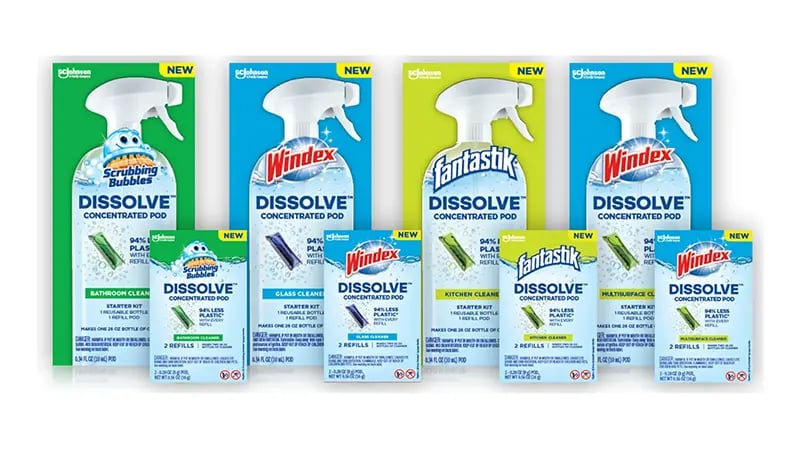
Windex has been exploring other ways to reduce packaging and waste for years. Products like the Windex® Mini concentrates, introduced all the way back in 2011, used less packaging, created less impact through shipping and reduced waste by allowing consumers to mix or refill the product themselves. In 2022, Windex® along with Scrubbing Bubbles® and fantastik®, introduced the DISSOLVE™ Concentrated Pods, which uses 94% less plastic than a 23-fluid-ounce or larger same-branded sprayer bottle. Concentrates can reduce both the amount of packaging needed and the materials that have to be shipped.
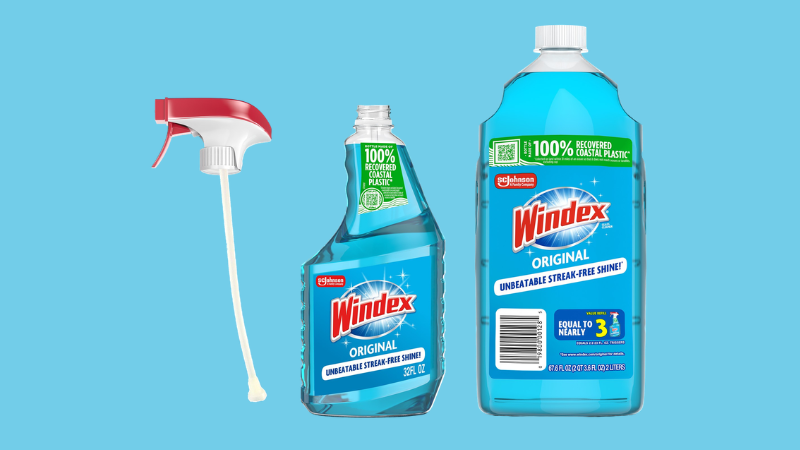
Sometimes the opportunity and value are in reuse and refills. Other times, it means choosing recycled or recovered packaging so that the plastic already in the environment or waste stream can be used productively, ultimately reducing the creation of new plastic. Often, the most effective solution for plastic packaging combines multiple strategies, such as incorporating recycled content, while also enabling the ability to refill and reuse.
No single approach solves every packaging challenge. The right answer may be a refill, a reusable component, recycled material, a concentrate or simply less material. Often, it may be a combination of several approaches. Ultimately, sustainable packaging is about smarter systems, not just smaller packages. Every material has trade-offs. Every component has a job. And every solution has to work in the real world.