
Glass, Aluminium, Paper or Plastic? Oh My.

What makes packaging more sustainable is more nuanced than it seems and, sometimes, plastic makes sense.
When we shop, we make dozens of small decisions about the products we buy, and packaging is a big part of that process. Paper cartons, aluminium cans, sleek glass bottles and, of course, plastic containers all line the shelves. While packaging is often overlooked, it plays a significant role in product safety, affordability and sustainability.
Today’s consumers are increasingly aware of their environmental impact. A recent study shows that more than half of global consumers have chosen products with sustainable packaging in the past 6 months, and 90% say they are more likely to buy from brands using eco-friendly packaging. But as interest in sustainability grows, so does confusion, especially around plastic.
With plastic pollution a growing concern and headlines warning of microplastics in our oceans, it is no surprise many people reach for alternatives like glass, aluminium or paper. But here is the catch: there is no universally “right” choice when it comes to sustainable packaging. The most eco-friendly option can vary based on what you are buying, where you live and how the packaging is used.
So, can plastic still be a sustainable choice? In some cases, yes.
Weighing the Options: Why Packaging Is Not One-Size-Fits-All
When it comes to choosing packaging materials, companies must consider a variety of factors, not just environmental impact. Safety, durability, cost, shelf life and convenience are all part of the equation. A package must protect the product, extend its life and appeal to consumers, all while aiming to reduce waste.
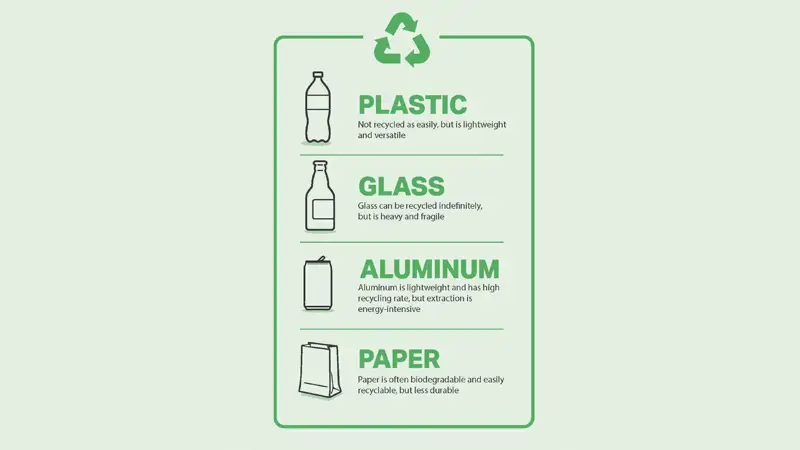
Glass, paper and aluminium each have their strengths. Glass, for example, can be recycled indefinitely and has a premium look and feel. Paper is often biodegradable and easily recyclable. Aluminium is lightweight and has a high recycling rate.
But each material also comes with trade-offs. Glass is heavy and fragile, increasing transportation emissions and the risk of breakage. Paper is less durable and can create waste during production. Aluminium extraction is energy-intensive. These materials, while more widely accepted in kerbside recycling, can still end up in landfill depending on local systems.
Plastic is by far the most widely used of all the packaging materials, and is often the most scrutinised. It is lightweight, durable and affordable, making it a go-to choice for manufacturers and consumers. But it also has a reputation problem.
Plastic waste, however, is a major global issue. Just 9% of plastic is recycled worldwide, and the rest often ends up in landfill, incinerators or the environment, where it can persist for hundreds of years. Microplastics are now found everywhere, from ocean floors to the food we eat. It is no wonder that many people try to avoid plastic altogether.
Still, the story is not that simple.
While plastic has its challenges, it also has the potential to be part of the solution, especially when it is reused, appropriately recycled or reimagined in more circular formats. Plastic can even have a lower environmental impact than glass or paper, depending on how it is made, used and disposed of. It is not a one-size-fits-all answer, but it may be a more sustainable option than you assume.
The Plastic Problem and Its Potential
Not all plastics are created equal, and not all plastic use is inherently unsustainable.
Some types of plastics can be recycled effectively. PET (used in many beverage bottles) and HDPE (used in cleaning product bottles) are among the most widely recycled plastics in the world. Many brands are developing packaging made with post-consumer recycled plastic, which not only gives plastic a second life, but also reduces the demand for virgin materials.
Refillable and reusable plastic systems can also cut waste dramatically. For example, SC Johnson’s DISSOLVE™ concentrated refill pods for brands like Windex® and Scrubbing Bubbles® use 94% less plastic than ready-to-use alternatives. Their trigger spray bottles are designed to last for up to 10,000 sprays, meaning they can be reused multiple times with refills rather than thrown away after a single use.
In fact, according to life-cycle assessments (LCAs), plastic containers can outperform glass or paper in certain conditions, particularly when reused, properly recycled or used in concentrated formats that reduce overall material consumption.
So, What Should Consumers Do?
While there is no perfect packaging option, there are smart ways to make more sustainable choices with plastic:
- Look for recycled content. Choose products made with post-consumer recycled (PCR) plastic. This keeps plastic in circulation and out of landfill or oceans.
- Refill and reuse. Many cleaning and personal care products now come in refill formats. Reusing a plastic bottle multiple times can significantly reduce its environmental impact.
- Recycle the right way. Learn what your local recycling programme accepts. Not all plastics are recyclable everywhere, and cleaning, sorting and removing non-recyclable parts (like caps or labels) can improve recycling success.
Ultimately, the key to sustainable packaging is not just swapping plastic for another material; it is rethinking how we use all packaging. That means using less where we can, designing for circularity, and supporting systems that reduce waste across a product’s entire life cycle.
The Bottom Line
There is no one-size-fits-all solution when it comes to packaging sustainability. Glass, paper and aluminium may offer benefits in specific scenarios, but when used thoughtfully, plastic can still be a responsible and sustainable choice.
So, next time you are debating between a glass bottle and a plastic one, ask yourself: Is this package refillable? Recyclable? Made from recycled material? If the answer is yes, you might just be holding a more sustainable solution in your hands.