
Five SC Johnson Innovations that Support Product Circularity

From packaging to product design, these innovations make circular solutions part of everyday life so less plastic ends up in landfill, oceans and our communities.
When you recycle a bottle or refill a favourite product, you are part of something bigger: the circular economy. A circular economy means materials never become waste. It is a simple but powerful idea: design out waste and keep materials in use and out of landfill through reuse and recycling.
As the circular economy concept has become more widely accepted, companies have been rethinking how they design, make and remake their products. The Ellen MacArthur Foundation estimates that 80 per cent of a product’s environmental impacts are determined during its design phase.
SC Johnson has been working for decades to make circular solutions part of everyday life. From launching our first recycled plastic bottle in 1990 to pioneering concentrated cleaner refills in 2011, we have long been finding ways to help families waste less and reuse more. In 2024 alone, we used more than 17,000 tonnes of post-consumer recycled material in our products. Today, that work continues with innovations that make recycling easier, cut packaging waste and offer more innovative ways to refill and reuse.
Here is a look at five recent real-world examples of how SC Johnson is helping to keep materials in use, reduce waste and make it easier for you to make more sustainable choices.
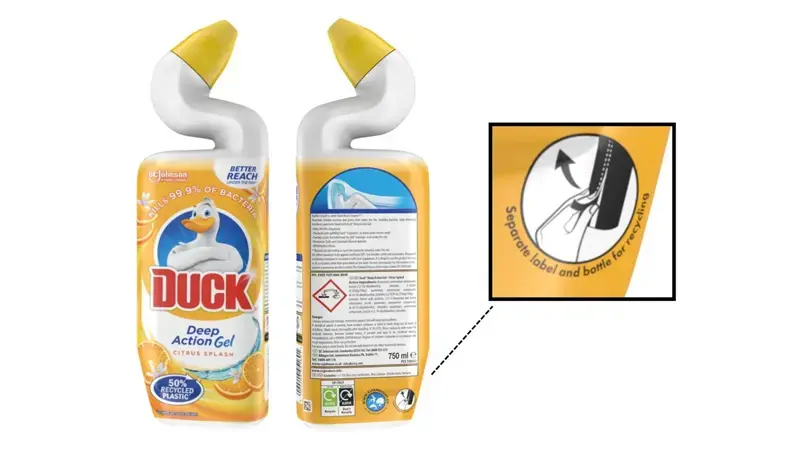
Making Recycling Easier with Perforated Shrink Sleeves (Duck)
Shrink sleeves offer lots of space for product messaging and design. They can, however, be tough to recycle, primarily due to material compatibility issues and difficulties in separation during the recycling process.
Shrink sleeves must be removed before sending a container to recycling, and consumers are encouraged to remove them before placing them in the bin. Few things are more frustrating than wrestling with a label that is nearly impossible to peel off. This happens because shrink sleeves are designed to adhere tightly to the container, making it difficult to grab and peel.
To help facilitate recycling, Duck has begun adding perforations to the product’s shrink sleeves. This allows the consumer to tear open the packaging easily without the need for scissors or other tools.
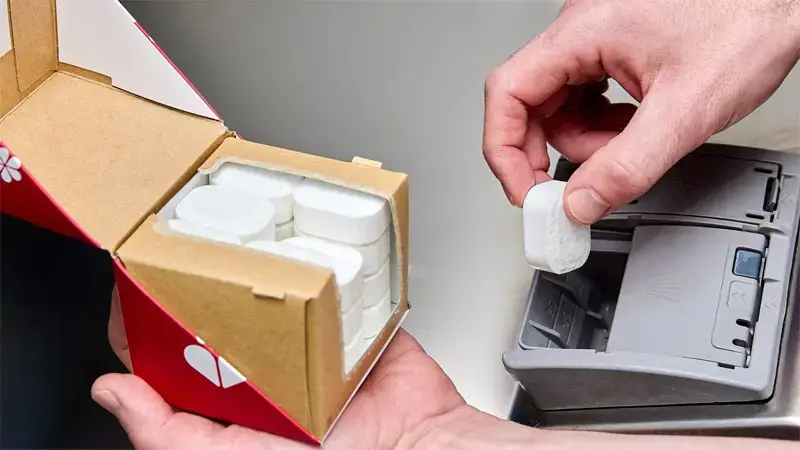
Eliminating Plastic: Dishwasher Tablets Without the Wrapper (Ecover)
One of the great things about detergent pods is that they take the guess work out of cleaning. There is no need to measure with the right amount already packed in. For SC Johnson, the challenge was to maintain that convenience while also reducing excess plastic in both the pod and its packaging.
In early 2025, Ecover launched All-In-One and All-In-One Power, the new dishwasher tablets with 40% more enzymes for improved stain removal. They are packaged in a dry, concentrated tablet form with no plastic wrapper.
The tablets also use a smaller, compact, recyclable box with a minimum of 60% post-consumer recycled cardboard. The reduced size decreases the amount of shipping materials needed and frees up 68% more space under your kitchen sink than plastic wrapped dishwasher tablets.
Smarter Shipping: Designing Out Waste From the Start
Packaging waste is not just a hassle for your recycling bin – it is a growing environmental challenge. Whereas traditional retail products are typically packed into larger containers for shipment, e-commerce goods are usually packaged individually before being shipped out by the seller or fulfilment centre. In many cases, they are overpackaged. For example, a box within a box or a retail package wrapped up in excessive bubble wrap or void fill. Not only is overpackaging frustrating for customers; it is also a problem because a lot of it ends up in landfill – or worse, as pollution in our gardens, parks or oceans.
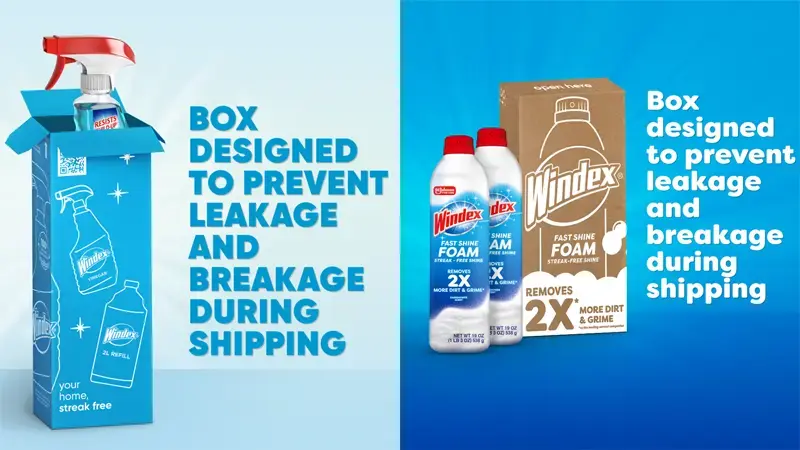
SC Johnson has been exploring opportunities to reduce excess shipping materials in partnership with Amazon. As part of the Ships in Product Packaging programme, customer orders for Windex arrive in a box specifically designed for the product’s size instead of an oversized box with extra plastic filler, reducing waste and the risk of breakage.
Since joining Amazon’s Ships in Product Packaging programme in late 2023, SC Johnson has used 58 tonnes less paper, equivalent to saving 1 million trees, and 4 tonnes less plastic, equivalent to saving 450 million plastic bottles.
Refill, Reuse, Repeat: Expanding Consumer Options (Mrs. Meyer’s, method, Ecover)
According to the World Economic Forum, half of global plastic production is for single use. Giving plastic a second, third or fourth life not only helps reduce the demand for new plastic and the emissions-intensive production processes required to make it, but it can also spare the environment hundreds of plastic bottles each year. According to a report by the World Economic Forum, if just 10 to 20 per cent of the plastic packaging produced today were reused, it could cut the amount of plastic waste entering the ocean in half.
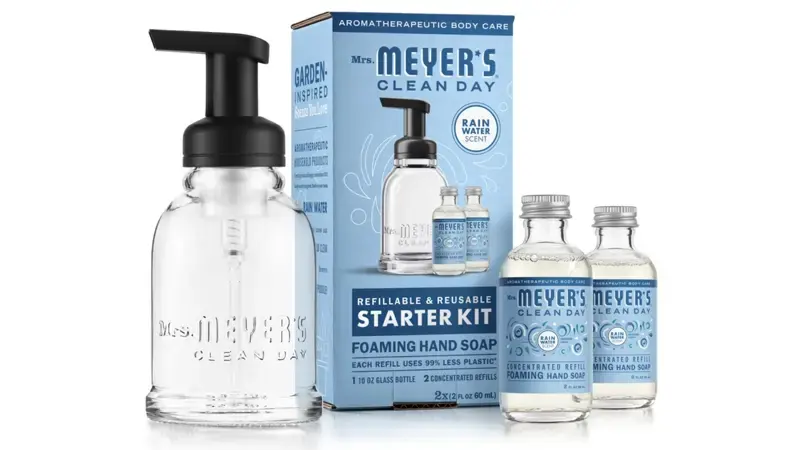
SC Johnson has long been a leader in providing consumer refill and reuse solutions and continues to focus on integrating them across their product lines. Mrs. Meyer’s Clean Day® brand introduced easy-to-use concentrated hand soap refills with a reusable glass bottle, while method’s® refillable aluminium hand wash dispensers are refilled with tubs made from 50% recycled plastic.
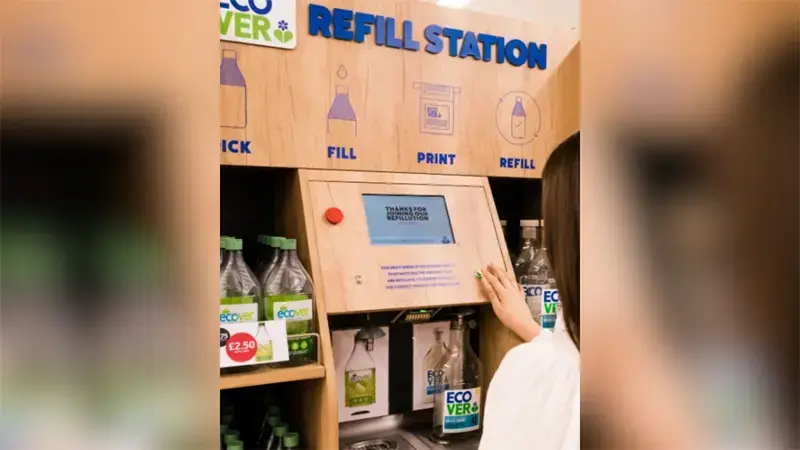
Ecover’s initiative, the Refillution has established over 700 refill stations across the United Kingdom. Instead of binning an empty bottle, consumers can now bring it into a local health food store, zero waste shop or some bigger supermarkets to refill through a dispensing system. Similar to the bulk bins of coffee beans found at supermarkets, consumers can refill their washing up liquid, laundry detergent and toilet cleaner, reducing the need for more plastic.
Small Choices Can Lead to a Big Impact
Building a circular economy takes time, and it will take all of us, from consumers to businesses to government, working together to drive the systemic changes needed to support it.
However, every small action adds up. Every time you recycle a bottle, refill a cleaning product or choose to buy something with less packaging, you are keeping materials in use and minimising waste.